Meaningful Conversation Starters for Dates, Friends, Networking

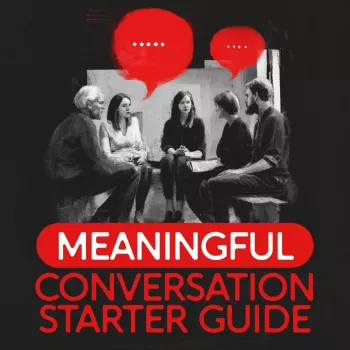
Meaningful Conversation Starter Guide for Dating, Friendship, and Networking
Good conversation rarely comes from trying to impress—it comes from making it easy for the other person to share something real. A simple set of thoughtful questions and follow-ups can turn small talk into connection, whether the setting is a first date, a new friendship, or a professional event.
What Makes a Conversation Feel Meaningful
Meaningful conversation has a rhythm: invite, listen, respond, and build. These small shifts make an everyday chat feel like genuine connection.
- Balanced sharing: ask, listen, then offer a short related detail about yourself so it feels mutual.
- Specificity over broadness: “What’s been energizing lately?” tends to land better than “How are you?”
- Gentle depth: start light, then move toward values, stories, and preferences once rapport is established.
- Good follow-ups: use “What made that stand out?” or “How did you decide?” to invite a story.
- Respect for boundaries: treat a short answer as a signal to pivot rather than push.
Strong listening matters just as much as strong questions. If you want a quick refresher on what “active listening” looks like in practice, Greater Good Magazine’s overview is a helpful reference.
How to Use the Printable Guide in Real Situations
Having a few prompts ready doesn’t make a conversation scripted—it makes you less likely to panic and default to the same surface-level questions.
- Before meeting: pick 6–10 questions and highlight 2 “go-to” openers plus 2 deeper options.
- During the conversation: aim for one question per topic, then spend time on follow-ups instead of rapid-fire asking.
- If it feels awkward: name the shift gently (“Mind if I ask something a bit more interesting than small talk?”).
- After a good answer: reflect back the theme (“Sounds like you value freedom and creativity.”) and invite expansion.
- After the interaction: jot down one detail to remember (favorite hobby, upcoming trip, a goal) for easy reconnection later.
Conversation Starters by Setting (with suggested follow-ups)
| Setting | Starter question | Follow-up that deepens naturally | What it reveals |
|---|---|---|---|
| First date | What’s a small moment from this week that made you feel unexpectedly happy? | What do you think that says about what you enjoy day-to-day? | Values and lifestyle |
| New friendship | What hobby or interest do you wish more people would ask you about? | How did you get into it? | Identity and passions |
| Networking | What kind of work has felt most rewarding to you recently? | What part of that project energized you most? | Motivation and strengths |
| Group hangout | What’s a show, book, or video that actually changed your perspective? | What stuck with you after it ended? | Curiosity and mindset |
| Long-term relationship | What’s something you miss doing that you’d like to bring back? | What would make it easier to start again? | Needs and growth |
Dating: Questions That Create Comfort and Chemistry
Great date conversation builds ease first, then momentum. A helpful rule: if the answer is flowing, deepen; if the answer is short, lighten and rewarm the vibe.
- Start with low-stakes warmth: “What’s your ideal way to spend a free evening?”
- Invite stories: “What’s a trip or day out you still talk about?”
- Explore preferences: “What kind of routines make you feel grounded?”
- Look for compatibility without interrogation: “What do you want more of in the next year?”
- Use playful depth: “What’s a belief you changed your mind about?”
- Watch pacing: if answers are brief, switch to lighter topics (food, favorites, local spots) and return to depth later.
If you want extra support for the “soft skills” around dating and social planning (RSVPs, follow-up texts, tone, and timing), the Modern Etiquette Micro-Course (printable guide) is an easy, low-pressure refresher.
Friendship: Building Trust Without Oversharing
Friendship questions work best when they feel validating and spacious—like you’re giving someone room to show who they are, not asking them to perform.
Relationship researchers consistently point to communication as a core ingredient of closeness; for a practical overview, the American Psychological Association’s guidance on communication and relationships is a solid starting point.
Networking: Turning Professional Chats into Real Rapport
Questions are powerful because they signal attention and invite specificity. For more on why this works in professional settings, browse Harvard Business Review’s research and essays on questioning (start at HBR.org).
Deepening the Conversation: Follow-Ups That Don’t Feel Like an Interview
Common Conversation Pitfalls (and Easy Fixes)
Printable Conversation Starter Guide: What’s Included and How to Get the Most From It
- Modern Etiquette Micro-Course | Printable Digital Etiquette Guide
- Homework Help Made Easy Toolkit for Parents (useful for family communication, routines, and calmer “how was your day?” follow-ups)
- Pet Travel Essentials Checklist for Safe Trips (a surprisingly easy conversation ally for road trips and shared travel planning)
FAQ
What if the other person answers with one word?
Use a gentle follow-up that offers options, such as “Was it more fun, challenging, or surprising?” If they stay brief, pivot to a lighter topic and try again later once comfort builds.
How many questions should be prepared for a date or networking event?
Choose 6–10 total: 2 easy openers, 2–3 mid-depth questions, 1–2 deeper questions, and 2 quick “reset” questions for transitions.
How can a conversation go deeper without feeling too personal?
Start with preferences and everyday experiences, then move to meaning (what they enjoyed, learned, or valued). Add optionality (“If you’re comfortable sharing…”) and respect any boundary signals.














Leave a comment